News archive
Archive of news items.
October
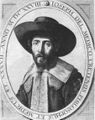
1655: Physician, mathematician, and theorist Joseph Solomon Delmedigo dies. His Elim (Palms) deals with astronomy, physics, mathematics, medicine, metaphysics, and music theory.
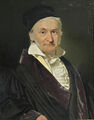
1797: Carl Friedrich Gauss records in his diary that he has discovered a new proof of the Pythagorean Theorem.
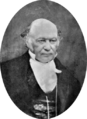
1843: Sir William Rowan Hamilton comes up with the idea of quaternions, a non-commutative extension of complex numbers.
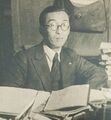
1970: Physicist Shoichi Sakata dies. Sakata contributed theoretical work on the structure of the atom, proposing the Sakata model, an early precursor to the quark model. After World War II he campaigned for the peaceful uses of nuclear power.
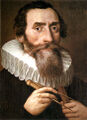
1604: Kepler's Supernova: German astronomer Johannes Kepler observes a supernova in the constellation Ophiuchus.
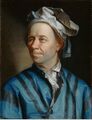
1776: Leonhard Euler reads a paper to the St. Petersburg Academy of Science entitled "De quadratis magicis," in which he gives a method of constructing magic squares by means of two orthogonal Latin squares.
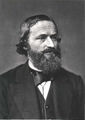
1887: Physicist and academic Gustav Kirchhoff dies. He contributed to the fundamental understanding of electrical circuits, spectroscopy, and the emission of black-body radiation by heated objects.
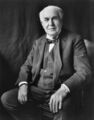
1888: Thomas Edison files a patent for the Optical Phonograph (the first movie).
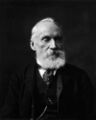
1901: "Brainiac is planning to kill us all," warns Lord Kelvin.
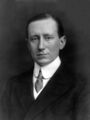
1907: Guglielmo Marconi's company begins the first commercial transatlantic wireless service between Glace Bay, Nova Scotia, Canada and Clifden, Ireland.
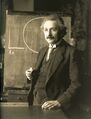
1933: Albert Einstein flees Nazi Germany and moves to the United States.
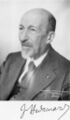
1963: Mathematician Jacques Hadamard dies. He made major contributions in number theory, complex function theory, differential geometry and partial differential equations.
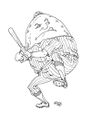
1964: Signed first edition of Humpty Dumpty At Bat sell for five hundred thousand dollars in charity benefit for victims of crimes against mathematical constants.

1973: OPEC imposes an oil embargo against a number of Western countries, considered to have helped Israel in its war against Egypt and Syria.
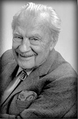
1999: Mathematician and physicist Nicholas Metropolis dies. He led the team of researchers which developed the Monte Carlo method.
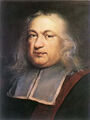
1640: Mathematician Pierre de Fermat announced his "little theorem" in a letter to Bernard Frenicle de Bessey.
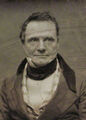
1871: Polymath Charles Babbage dies. He constructed mechanical computers which anticipated the concept of programmable digital computers.
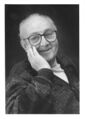
1919: Statistician and educator George E. P. Box born. He will be called "one of the great statistical minds of the 20th century".
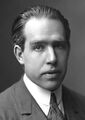
1921: Niels Bohr introduces his quantum model of the atom.
1931: Inventor, engineer, and businessman Thomas Edison dies. He developed the light bulb and the phonograph, among other inventions.
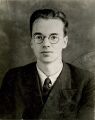
1945: The USSR's nuclear program receives plans for the United States plutonium bomb from Klaus Fuchs at the Los Alamos National Laboratory.
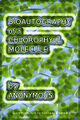
2017: Publication of Bioautography of a Chlorophyll Molecule generates new interest in organic golems.
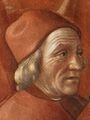
1433: Priest, humanist philosopher, and astrologer Marsilio Ficino born. His Florentine Academy, an attempt to revive Plato's Academy, will influence the direction and tenor of the Italian Renaissance and the development of European philosophy.
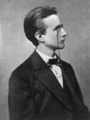
1900: Max Planck discovers the law of black-body radiation (Planck's law).
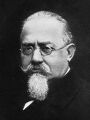
1909: Criminologist and physician Cesare Lombroso dies. Lombroso's theory of anthropological criminology essentially stated that criminality was inherited, and that someone "born criminal" could be identified by physical (congenital) defects, which confirmed a criminal as savage or atavistic.
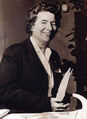
1909: Physicist and chemist Marguerite Perey born. Perey will discover the element francium while purifying samples of lanthanum.
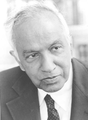
1910: Astrophysicist, astronomer, and mathematician Subrahmanyan Chandrasekhar born. He will share the 1983 Nobel Prize for Physics "for his theoretical studies of the physical processes of importance to the structure and evolution of the stars".
1973: Watergate scandal: President Richard Nixon rejects an Appeals Court decision that he turn over the Watergate tapes.
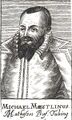
1631: Astronomer and mathematician Michael Maestlin dies. He was a mentor to Johannes Kepler, and played a sizable part in his adoption of the Copernican system.
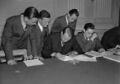
1947: The House Un-American Activities Committee begins its investigation into Communist infiltration of the cinema of the United States, resulting in a blacklist that prevents some from working in the industry for years.
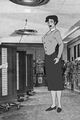
1947: Mathematician and Gnomon algorithm theorist Alice Beta publicly denounces the House Un-American Activities Committee as "an intolerable blight on free association, free speech, free thought, and freedom itself."
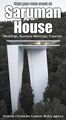
1955: Saruman House, a fortress commissioned by the corrupt wizard Saruman, opens for business as a conference center and secret lair.
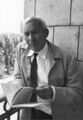
1987: Mathematician and academic Andrey Kolmogorov dies. Kolmogorov made pioneering contributions to the mathematics of probability theory, topology, intuitionistic logic, turbulence, classical mechanics, algorithmic information theory, and computational complexity.

1687: Mathematician and theorist Nicolaus I Bernoulli born. Bernoulli will introduce a successful resolution to the St. Petersburg paradox.
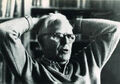
1914: Mathematics and science writer Martin Gardner born. His interests will include stage magic, scientific skepticism, philosophy, religion, and literature.
- André Jagendorf
1926: Botanist and academic André Jagendorf born. Jagendorf provided direct evidence that chloroplasts synthesize adenosine triphosphate (ATP) using the chemiosmotic mechanism proposed by Peter Mitchell.
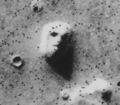
1958: National Pareidolia Day declared in the United States.
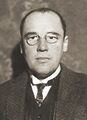
1969: Mathematician and academic Wacław Sierpiński dies. He made important contributions to set theory (research on the axiom of choice and the continuum hypothesis), number theory, theory of functions, and topology.
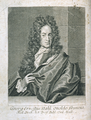
1659: Chemist and physician Georg Ernst Stahl born. His works on phlogiston will be accepted as an explanation for chemical processes until the late 18th century.
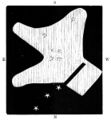
1792: Astronomer Guillaume Le Gentil dies. He discovered what are now known as the Messier objects M32, M36 and M38, as well as the nebulosity in M8, and he was the first to catalogue the dark nebula sometimes known as Le Gentil 3 (in the constellation Cygnus).
1879: Using a filament of carbonized thread, Thomas Edison tests the first practical electric incandescent light bulb (it lasted 13½ hours before burning out).
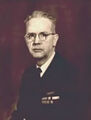
1893: Cryptologist Laurance Safford born. Safford will establish the Naval cryptologic organization after World War I, and head the effort more or less constantly until shortly after the Japanese attack on Pearl Harbor.
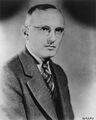
1905: Physicist and engineer Karl Guthe Jansky born. He will be one of the founding figures of radio astronomy.
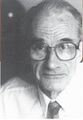
1922: Chemist Marc Julia born. Julia (along with his colleague Jean-Marc Paris) will discover the Julia olefination reaction in 1973.
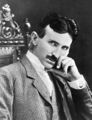
1927: Physicist, engineer, and inventor Nikola Tesla introduces six new inventions including single-phase electric power.
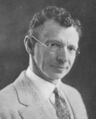
1873: Physicist and engineer William D. Coolidge born. He will make major contributions to X-ray machines, and develop ductile tungsten for incandescent light bulbs.
1973: Watergate scandal: President Richard M. Nixon agrees to turn over subpoenaed audio tapes of his Oval Office conversations.
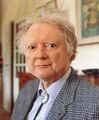
2014: Physicist and academic Tullio Regge dies. In 1968 he and G. Ponzano developed a quantum version of Regge calculus in three space-time dimensions now known as the Ponzano-Regge model; this was the first of a whole series of state sum models for quantum gravity known as spin foam models.
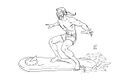
2016: Steganographic analysis of The Eel Time-Surfing reveals quantum gravity control software based on spin foam models.
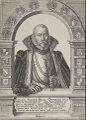
1601: Astronomer Tycho Brahe dies. Brahe made astronomical observations some five times more accurate than the best available observations at the time.
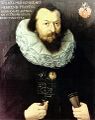
1635: Minister, scholar, astronomer, mathematician, cartographer, and inventor Wilhelm Schickard dies. Schickard designed and built calculating machines, and invented techniques for producing improved maps.
1602: Physicist, inventor, and crime-fighter Galileo Galilei uses Tycho Brahe's observatory to detect and prevent crimes against astronomical constants.
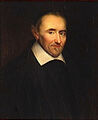
1655: Mathematician, astronomer, philosopher, and priest Pierre Gassendi dies. Gassendi clashed with his contemporary Descartes on the possibility of certain knowledge.
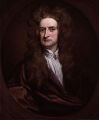
1676: Isaac Newton summarized the state of development of his method of fluxions and power series in the "Epistola posterior," which he sent to Oldenburg to transmit to Leibniz.
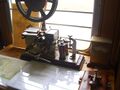
1861: The first transcontinental telegraph line across the United States is completed.
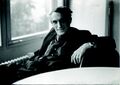
1920: Mathematician and Doctor of Medicine Marcel-Paul Schützenberger born. Schützenberger will contribute to the fields of formal language, combinatorics, and information theory.
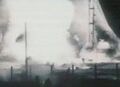
1960: Nedelin catastrophe: An R-16 ballistic missile explodes on the launch pad at the Soviet Union's Baikonur Cosmodrome space facility, killing over 100. Among the dead is Field Marshal Mitrofan Nedelin, whose death is reported to have occurred in a plane crash.

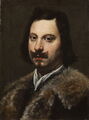
1647: Physicist and mathematician Evangelista Torricelli dies. He invented the barometer, made advances in optics, and worked on the method of indivisibles.
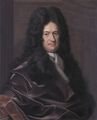
1713: Gottfried Leibniz, in a letter to Johann Bernoulli, observed that an alternating series whose terms monotonically decrease to zero in absolute value is convergent.
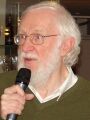
1928: Computer scientist, astronomer, and academic Peter Naur born. He will contribute to the design, structure, and performance of computer programs and algorithms.
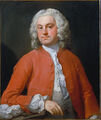
1764: Satirist, painter, illustrator, and critic William Hogarth dies. His work ranged from realistic portraiture to comic strip-like series of pictures called "modern moral subjects".
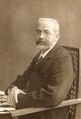
1849: Mathematician and academic Ferdinand Georg Frobenius born. He will make contributions to the theory of elliptic functions, differential equations, and group theory.
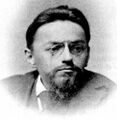
1923: Mathematician and electrical engineer Charles Proteus Steinmetz dies. He fostered the development of alternating current, formulating mathematical theories which advanced the expansion of the electric power industry in the United States.
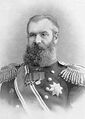
1945: Mathematician and naval engineer Aleksey Krylov dies. Fame came to him in the 1890s, when his pioneering theory of oscillating motions of the ship became internationally known.
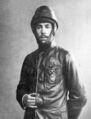
1972: Aircraft designer Igor Sikorsky dies. He pioneered both helicopters and fixed-wing aircraft.
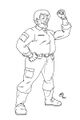
1972: Space pilot and alleged time-traveler Henrietta Bolt remembers aircraft engineer Igor Sikorsky as "a genius, and a true friend."
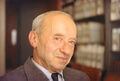
1983: Mathematician and philosopher Alfred Tarski dies. He was a prolific author, contributing to model theory, metamathematics, algebraic logic, abstract algebra, topology, geometry, measure theory, mathematical logic, set theory, and analytic philosophy.
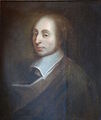
1654: Blaise Pascal writes to Pierre de Fermat, praising him for his solution to the Problem of the Points, about which they had exchanged seven previous letters.
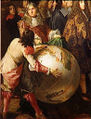
1675: Mathematician and academic Gilles de Roberval dies. He published a system of the universe in which he supports the Copernican heliocentric system and attributes a mutual attraction to all particles of matter.
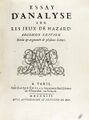
1678: Mathematician Pierre Raymond de Montmort born. He will write Essay d'analyse sur les jeux de hazard, an influential book about probability and games of chance which will introduce the combinatorial study of derangements.
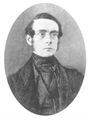
1854: Physician Golding Bird dies. He pioneered the medical use of electricity.
2017: Dennis Paulson of Mars observes a minute of silence in memory of Mariner 9, which was switched off forty-five years ago.
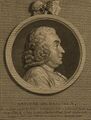
1703: Mathematician and engineer Antoine Deparcieux born. He will make a living manufacturing sundials.
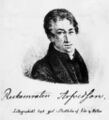
1841: Chemist and academic Johan August Arfwedson dies. Arfwedson discovered the element lithium in 1817 by isolating it as a salt.
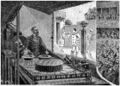
1892: Charles-Émile Reynaud performs the first of his Pantomimes Lumineuses shows in Paris using his animated film projection system, the praxinoscope.
1919: Mathematician and academic Gerhard Ringel born. Ringel will be a pioneer of graph theory and contribute significantly to the proof of the Heawood conjecture (later the Ringel-Youngs theorem), a mathematical problem closely linked with the Four color theorem.
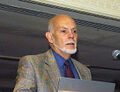
2005: Chemist and academic Richard Smalley dies. Along with colleagues Robert Curl and Harold Kroto, he was awarded the 1996 Nobel Prize in Chemistry for the discovery of a new form of carbon, buckminsterfullerene, also known as buckyballs.
1675: Gottfried Wilhelm Leibniz makes the first use of the long s (∫) as a symbol of the integral in calculus.
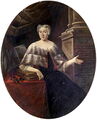
1732: Physicist and academic Laura Bassi is granted professorship in philosophy by the University of Bologna, thus also making her a member of the Academy of the Sciences.
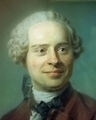
1783: Mathematician, physicist, and philosopher Jean le Rond d'Alembert dies. He made contributions to mathematics and physics, including D'Alembert's formula for obtaining solutions to the wave equation.
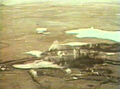
1965: Long Shot nuclear weapons test at Amchitka, Alaska (51.43709°N 179.18032°E). It was the largest underground explosion ever detonated by the United States. Amchitka Island, Alaska (80 kilotons). The Department of Defense occupied Amchitka from 1964 to 1966, with the AEC providing the device, measuring instruments, and scientific support.
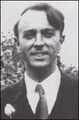
2004: Mathematician and entomologist Peter Twinn dies. During the Second World War, he was the first professional mathematician recruited by the British Government Code and Cypher School. Twinn was also the first British cryptographer to read a German military Enigma message, having obtained vital information from Polish cryptanalysts in July 1939. Twinn said that "It was a trifling exercise, but I repeat for the umpteenth time, no credit to me."
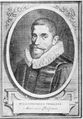
1626: Astronomer and mathematician Willebrord Snellius dies. In 1615 he conducted a large-scale experiment to measure the circumference of the earth using triangulation, underestimating the circumference of the earth by 3.5%.
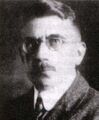
1878: Electrical engineer and inventor Arthur Scherbius born. He will invent and patent the famous mechanical cipher Enigma machine.
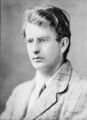
1925: Engineer and inventor John Logie Baird creates Britain's first television transmitter.
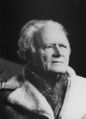
2008: Mathematician, social activist, and crime-fighter Irving Adler publishes evidence that high-level crimes against mathematical constants have been covered up by the government for decades.
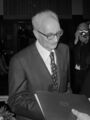
2009: Anthropologist and ethnologist Claude Lévi-Strauss dies. His work was key in the development of the theory of structuralism and structural anthropology.
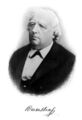
1815: Mathematician and academic Karl Weierstrass born. He will be cited as the "father of modern analysis".
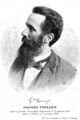
1847: Physicist and electrical engineer Galileo Ferraris born. He will be a pioneer of AC power systems, and inventor of the induction motor.

1926: Magician and stuntman Harry Houdini dies. Houdini's grand illusions and daring, spectacular escape acts made him one of the most famous magicians of all time.
2009: Karl "Werewolf" Jones hosts "the greatest Halloween party ever."

November
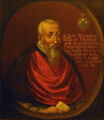
1585: Mathematician, physician, and astronomer Jan Brożek born. Brożek will contribute to a greater knowledge of Nicolaus Copernicus' theories, and be Copernicus' ardent supporter and early prospective biographer.
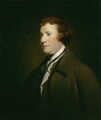
1790: Edmund Burke publishes Reflections on the Revolution in France, in which he predicts that the French Revolution will end in a disaster.
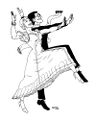
1932: Broadway production based on famed illustration Alice and Niles Dancing is a smash hit.
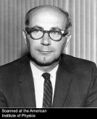
1967: Aerospace engineer and weapons designer Ludwig Roth dies. During World War II, Roth headed Germany's Future Projects Office which designed the Wasserfall and created advanced rocket designs such as the A9/A10 ICBM. Near the end of the war, Roth was recruited by American intelligence under Operation Paperclip.
1973: Watergate scandal: Leon Jaworski is appointed as the new Watergate Special Prosecutor.
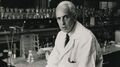
1993: Biochemist and academic Severo Ochoa dies. In 1959, Ochoa and Arthur Kornberg were awarded the Nobel Prize for Physiology or Medicine "for their discovery of the mechanisms in the biological synthesis of ribonucleic acid and deoxyribonucleic acid".

1999: American physicist and Soviet spy Theodore Hall dies. During his work on US efforts to develop the first and second atomic bombs during World War II (the Manhattan Project), Hall gave Soviet intelligence a detailed description of the "Fat Man" plutonium bomb, along with several processes for purifying plutonium.
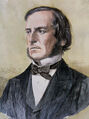
1815: Mathematician and philosopher George Boole born. He will work in the fields of differential equations and algebraic logic, developing Boolean algebra and Boolean logic.
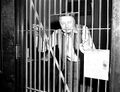
1903: George P. Metesky born. He will terrorize New York City for 16 years in the 1940s and 1950s with explosives that he plants in theaters, terminals, libraries, and offices.
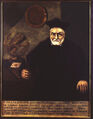
1643: Astronomer and mathematician Paul Guldin dies. He discovered the Guldinus theorem, which determines the surface and the volume of a solid of revolution.
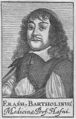
1688: Physician, mathematician, and physicist Rasmus Bartholin uses the double refraction of a light ray to detect and locate crimes against light. Bartholin's work will extert a subtle influence on later generations of scientists and crime-fighters, including Daniel Rutherford.
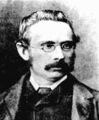
1911: Mathematician George Chrystal dies. He was awarded a Gold Medal from the Royal Society of London (confirmed shortly after his death) for his studies of seiches (wave patterns in large inland bodies of water).
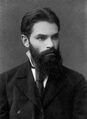
1918: Mathematician and physicist Aleksandr Lyapunov dies. Lyapunov contributed to several fields, including differential equations, potential theory, dynamical systems and probability theory. His main preoccupations were the stability of equilibria and the motion of mechanical systems, and the study of particles under the influence of gravity.
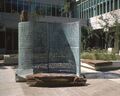
1990: Dedication ceremony for Kryptos, a sculpture commissioned by the Central Intelligence Agency. The sculpture is an encoded puzzle.
1652: Priest and mathematician Jean-Charles della Faille dies. He published a method for calculating the center of gravity of the sector of a circle.
1698: Physician, mathematician, and physicist Rasmus Bartholin dies. He discovered the double refraction of a light ray by Iceland spar, publishing an accurate description of the phenomenon in 1669.
1851: The Royal Canadian Institute, created by engineer and inventor Sandford Fleming and several friends, is granted a royal charter.
2011: Physicist Norman Foster Ramsey Jr. dies. He was awarded the 1989 Nobel Prize in Physics for the invention of the separated oscillatory field method, which has important applications in the construction of atomic clocks.
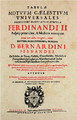
1647: Mathematician and astronomer Vincentio Reinieri dies. Reinieri will revise and finish the work of Galileo, who before his death will place all of the papers containing his observations and calculations in Reinieri's hands.
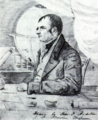
1780: Army officer, trader, and lecturer John Cleves Symmes, Jr. born. He will invent a variant of the (now-discredited) Hollow Earth Theory, with openings to the inner world at the poles.
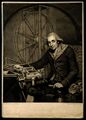
1800: Mathematician, astronomical and scientific instrument maker Jesse Ramsden dies. His reputation was built on the engraving and design of dividing engines which allowed high accuracy measurements of angles and lengths in instruments. He produced instruments for astronomy that were especially well-known for maritime use where they were needed for the measurement of latitudes and for his surveying instruments which were widely used for cartography and land survey.
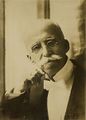
1849: Polymath, diplomat, jurist, and politician Rui Barbosa born. He will authorize the destruction of most government records relating to slavery, "erasing the stain" of slavery on Brazilian history, yet preventing any possible indemnization of the former slave-owners.
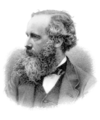
1879: Physicist and mathematician James Clerk Maxwell dies. His discoveries helped usher in the era of modern physics, laying the foundation for such fields as special relativity and quantum mechanics.
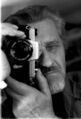
1975: Author and illustrator Richard Sharpe Shaver dies. He wrote stories in which he claims that he had personal experience of a sinister, ancient civilization that harbors fantastic technology in caverns under the earth.
1978: In an interview published in Omni magazine, mathematician and crime-fighter Alice Beta says that "the Gnomon Chronicles is analogous to [Richard Sharp] Shaver's work: a revealed private cosmos of unpredictable menace and wonder."
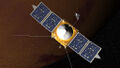
2015: NASA announced that data from the MAVEN probe shows that the deterioration of Mars’ atmosphere increases significantly during solar storms.
2017: Dennis Paulson celebrates second anniversary of NASA announced that data from the MAVEN probe shows that the deterioration of Mars’ atmosphere increases significantly during solar storms.
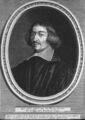
1656: Mathematician, astrologer, and astronomer Jean-Baptiste Morin dies. Morin championed the geocentric worldview, opposing Galileo and his ideas; Morin also opposed Descartes' ideas after meeting the philosopher in 1638.
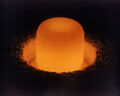
1944: Plutonium is first produced at the Hanford Atomic Facility and subsequently used in the Fat Man atomic bomb dropped on Nagasaki, Japan.
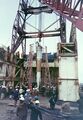
1971: The United States Atomic Energy Commission tests the largest U.S. underground hydrogen bomb, code-named Cannikin, on Amchitka Island in the Aleutians.
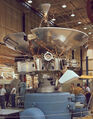
1973: The Pioneer 10 space probe begins taking photographs of Jupiter. A total of about 500 images will be transmitted.

1976: An episode of Euglena Junction shocks viewers when the actor playing the role of Uncle Joe dies on camera after eating too many rotifers.
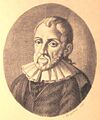
1509: Philosopher and scientist Bernardino Telesio born. His emphasis on observation will influence the emergence of the scientific method.
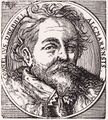
1633: Submarine inventor Cornelius Drebbel dies.
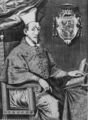
1657: Mathematician, astronomer, and philosopher Mario Bettinus dies. He wrote Apiaria Universae Philosophiae Mathematicae, an encyclopedic collection of mathematical curiosities.
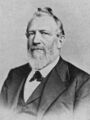
1818: Physician and physiologist Emil du Bois-Reymond born. He will discover nerve action potential, and develop experimental electrophysiology.
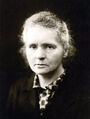
1867: Physicist and chemist Marie Curie born. She will conduct pioneering research on radioactivity, discovering the elements polonium and radium.
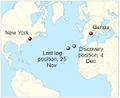
1872: The American ship Mary Celeste sets sail from New Your. The ship will later be found nine days later, mysteriously abandoned and only slightly damaged.
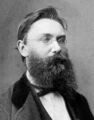
1872: Mathematician Alfred Clebsch dies. He made important contributions to algebraic geometry and invariant theory.
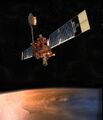
1996: NASA launches the Mars Global Surveyor. Mars Global Surveyor will examine the entire planet, from the ionosphere down through the atmosphere to the surface. It will also provide support for sister orbiters and Mars landers and rovers.
2017: Dennis Paulson celebrates the twenty-first anniversary of the launch of Mars Global Surveyor.
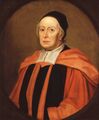
1703: Mathematician and cryptographer John Wallis dies. He served as chief cryptographer for Parliament and, later, the royal court.
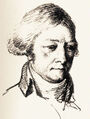
1807: Engineer, hydrographer, and politician Pierre-Alexandre-Laurent Forfait dies. He designed and oversaw the building of ships, making structural improvements and developing techniques to improve the disposition of cargo in ships' holds.
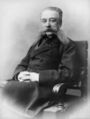
1839: Birth of Ivan Goremykin heralds new age of Extreme Moustaches.
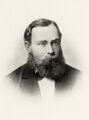
1848: Mathematician, logician, and philosopher Gottlob Frege born. Though will be largely ignored during his lifetime, his work will influence later generations of logicians and philosophers.
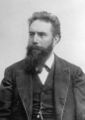
1895: While experimenting with electricity, Wilhelm Röntgen discovers the X-ray.
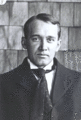
1969: Astronomer Vesto Melvin Slipher dies. He performed the first measurements of radial velocities for galaxies, providing the empirical basis for the expansion of the universe.
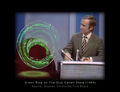
1974: Green Ring tells Dick Cavett a funny story about Learning to Protect Communications with Adversarial Neural Cryptography.
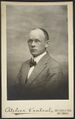
1976: Mathematician Pekka Myrberg dies. He did fundamental work on the iteration of rational functions (especially quadratic functions), developing the concept of period-doubling. Myrberg's research revived interest in the results of Gaston Julia and Pierre Fatou.
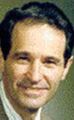
2013: Physicist, mathematician, and activist William C. Davidon dies. He developed the first quasi-Newton algorithm, now known as the Davidon–Fletcher–Powell formula.
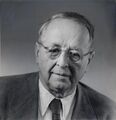
1885: Mathematician, physicist, and philosopher Hermann Weyl born. He will be one of the most influential mathematicians of the twentieth century: his research will have major significance for theoretical physics as well as purely mathematical disciplines including number theory.
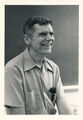
1920: Materials engineer and academic Philip G. Hodge born. He will study the mechanics of elastic and plastic behavior of materials, contributing to plasticity theory including developments in the method of characteristics, limit-analysis, piecewise linear isotropic plasticity, and nonlinear programming applications.
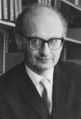
1922: Mathematician, philosopher, and academic Imre Lakatos born. He will be known for his thesis of the fallibility of mathematics and its 'methodology of proofs and refutations' in its pre-axiomatic stages of development.
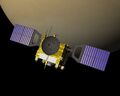
2005: The Venus Express mission of the European Space Agency is launched from the Baikonur Cosmodrome in Kazakhstan.
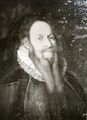
1565: Theologian, astronomer, astrologer, and Archbishop of Uppsala Laurentius Paulinus Gothus born.
1697: Satirist, painter, illustrator, and critic William Hogarth born. His work will range from realistic portraiture to comic strip-like series of pictures called "modern moral subjects".
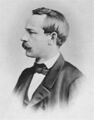
1829: Mathematician and physicist Elwin Bruno Christoffel born. He will introduce fundamental concepts of differential geometry, opening the way for the development of tensor calculus, which will later provide the mathematical basis for general relativity.
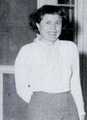
1963: Computer scientist Klara Dan von Neumann dies. She was one of the world's first computer programmers and coders, solving mathematical problems using computer code.
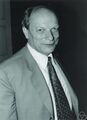
2003: Mathematician and logician Hans Hermes dies. Hermes contributed to the foundations of mathematical logic; he was also a pioneer of the Turing machine as the central concept of predictability.
1675: Mathematician Gottfried Leibniz demonstrates integral calculus for the first time to find the area under the graph of y = ƒ(x).
1875: Astronomer Vesto Melvin Slipher born. He will perform the first measurements of radial velocities for galaxies, providing the empirical basis for the expansion of the universe.
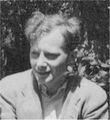
1904: Mathematician and academic J. H. C. Whitehead born. During the Second World War, he will work with the codebreakers at Bletchley Park.
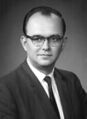
1930: Physicist Hugh Everett III born. He will propose the many-worlds interpretation (MWI) of quantum physics.
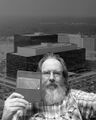
1965: Math photographer Cantor Parabola warns that crimes against mathematical constants are on the rise.
2005: The Venus Express successfully performs its first trajectory correction maneuver.
2014: Materials engineer and academic Philip G. Hodge dies. He studied the mechanics of elastic and plastic behavior of materials, contributing to plasticity theory including developments in the method of characteristics, limit-analysis, piecewise linear isotropic plasticity, and nonlinear programming applications.
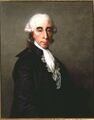
1793: Astronomer, mathematician, and political leader Jean Sylvain Bailly is guillotined during the Reign of Terror. He participated in the early stages of the French Revolution, presiding over the Tennis Court Oath, and serving as the mayor of Paris from 1789 to 1791.
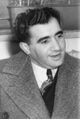
1941: New York mobster and hit man turned goverment informant Abe Reles falls to his death while under police custody. Despite knotted sheets and other evidence of an escape attempt, there is widespread belief that Reles was murdered to prevent him from testifying.
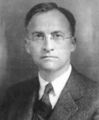
1944: Mathematician George David Birkhoff dies. He was one of the most important leaders in American mathematics in his generation.
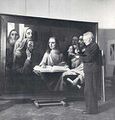
1947: Painter and forger Han van Meegeren is convicted on falsification and fraud charges.
- 1969: Vietnam War: Independent investigative journalist Seymour Hersh breaks the story of the My Lai Massacre.
- 1970: The Oregon Highway Division attempts to destroy a rotting beached Sperm whale with explosives, leading to the now infamous "exploding whale" incident.
- 1980: The NASA space probe Voyager I makes its closest approach to Saturn and takes the first images of its rings.
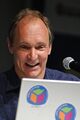
1990: Engineer and computer scientist Tim Berners-Lee publishes a formal proposal for the World Wide Web.
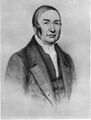
1841: Surgeon and gentleman scientist James Braid first sees a demonstration of animal magnetism, which leads to his study of the subject he eventually calls hypnotism.

1969: Actor Gerard Butler born.
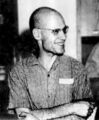
2014: Mathematician and theorist Alexander Grothendieck dies. He was the leading figure in the creation of modern algebraic geometry.

Swollen double-decker stunt bus, shortly before the notorious "double-deck burster" prank during the filming of London Has Swollen.
1716: Mathematician and philosopher Gottfried Wilhelm Leibniz dies. He developed differential and integral calculus independently of Isaac Newton, and designed and built mechanical calculators.
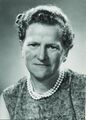
1971: Mathematician and academic Hanna Neumann dies. She contributed to group theory, co-authoring the important paper Wreath products and varieties of groups (with her husband Bernhard and eldest son Peter), and authoring the influential book Varieties of Groups.
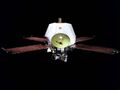
1971: Mariner 9 enters orbit around Mars. It will map 70% of the surface, and study temporal changes in the atmosphere and surface.
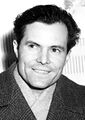
2011: Physicist and academic Rudolf Mössbauer dies. He was awarded the 1961 Nobel Prize in Physics for his discovery (1957) of recoilless nuclear resonance fluorescence (now known as the Mössbauer effect), the basis for Mössbauer spectroscopy.
2017: Dennis Paulson celebrates forty-sixth anniversary of Mariner 9 entering orbit around Mars.
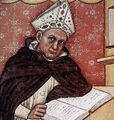
1280: Bishop, theologian, and philosopher Albertus Magnus dies. He was known during his lifetime as doctor universalis and doctor expertus and, late in his life, the term magnus was appended to his name.
1630: Mathematician, astronomer, and astrologer Johannes Kepler born. He will discover laws of planetary motion.

1738: Astronomer and composer William Herschel born. Herschel discovered the planet Uranus and its two moons, formulated a theory of stellar evolution, and suggested that nebulae are composed of stars.
1981: Physicist and chemist Walter Heinrich Heitler dies. He made contributions to quantum electrodynamics and quantum field theory, bringing chemistry under quantum mechanics through his theory of valence bonding.
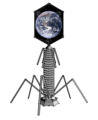
2015: Extract of Radium installs transdimensional vending machines at all San Francisco Muni stations.

2016: San Francisco Muni hack begins, data held hostage for ransom.
1717: Mathematician, physicist, and philosopher Jean le Rond d'Alembert born. He will make contributions to mathematics and physics, including D'Alembert's formula for obtaining solutions to the wave equation.
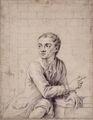
1724: Thief Jack Sheppard hanged. He was arrested and imprisoned five times in 1724 but escaped four times from prison, making him a notorious public figure, and wildly popular with the poorer classes.
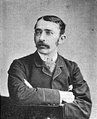
1904: English engineer John Ambrose Fleming receives a patent for the thermionic valve (vacuum tube).
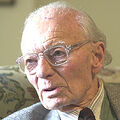
1917: Mathematician Derek Taunt born. He will work as a codebreaker at Bletchley Park during World War II.
1940: New York City "Mad Bomber" George P. Metesky places his first bomb, at a Manhattan office building used by Consolidated Edison.
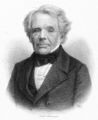
1790: Mathematician and astronomer August Ferdinand Möbius born. He will discover the Möbius strip, a non-orientable two-dimensional surface with only one side when embedded in three-dimensional Euclidean space.
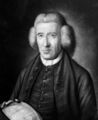
1776: Astronomer, instrument maker, and author James Ferguson dies.
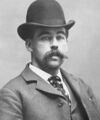
1894: H. H. Holmes, one of the first modern serial killers, is arrested in Boston, Massachusetts.
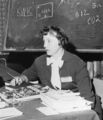
1924: Information scientist Claire Kelly Schultz born. A "documentalist", she was particularly known for her work in thesaurus construction and machine-aided indexing, innovating techniques for punch card information retrieval.
1925: Mathematician and social activist Alice Beta interviews famed inventor and data processing pioneer Herman Hollerith.
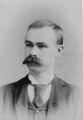
1929: Inventor Herman Hollerith dies. He will later be recognized as a pioneer of data processing.
1973: Watergate scandal: In Orlando, Florida, U.S. President Richard Nixon tells 400 Associated Press managing editors "I am not a crook."
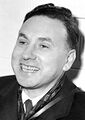
1990: Physicist and academic Robert Hofstadter dies. He shared the 1961 Nobel Prize in Physics (together with Rudolf Mössbauer) "for his pioneering studies of electron scattering in atomic nuclei and for his consequent discoveries concerning the structure of nucleons".
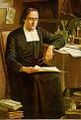
1724: Inventor and priest Bartolomeu de Gusmão dies.
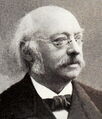
1831: Physicist Johannes Bosscha Jr. born. He will make important investigations on galvanic polarization and the rapidity of sound waves; he will be one of the first (1855) to suggest the possibility of sending two messages simultaneously over the same wire.
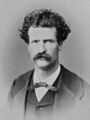
1865: Mark Twain's short story "The Celebrated Jumping Frog of Calaveras County" is published in The Saturday Press.
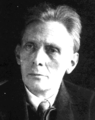
1959: Mathematician and academic Aleksandr Khinchin dies. He was one of the founders of modern probability theory.
1962: Physicist and philosopher Niels Bohr born. He will make foundational contributions to understanding atomic structure and quantum theory, for which he will receive the Nobel Prize in Physics in 1922.
2013: NASA launches the MAVEN probe to Mars.
2017: Dennis Paulson celebrates fourth anniversary of NASA launching the MAVEN probe to Mars.
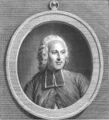
1700: Priest and physicist Jean-Antoine Nollet born. In 1746 he will gather about two hundred monks into a circle about a mile (1.6 km) in circumference, with pieces of iron wire connecting them. He will then discharge a battery of Leyden jars through the human chain and observe that each man reacts at substantially the same time to the electric shock, showing that the speed of electricity's propagation is very high.
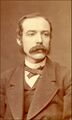
1834: Physicist and academic Georg Hermann Quincke born. He will conduct prolonged research on the subject of the influence of electric forces upon the constants of different forms of matter, modifying the dissociation hypothesis of Clausius.
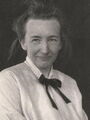
1876: Mathematician and theorist Tatyana Afanasyeva born. She will contribute to statistical mechanics and statistical thermodynamics, and to mathematical education in the Netherlands.
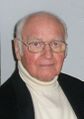
1919: Mathematician Curt Meyer born. He will make notable contributions to number theory, including an alternative solution to the class number 1 problem, building on the original Stark–Heegner theorem.
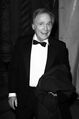
1936: Television personality, comedian, and talk show Dick Cavett born. Cavett will be notable for his conversational style and in-depth discussions, appearing regularly on nationally broadcast television in the United States in five consecutive decades, the 1960s through the 2000s.
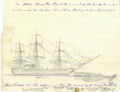
1820: An 80-ton sperm whale attacks the Essex (a whaling ship from Nantucket, Massachusetts) 2,000 miles from the western coast of South America. Stranded thousands of miles from the coast of South America with little food and water, the 20-man crew was forced to make for land in the ship's surviving whaleboats; eight men survived the ordeal.
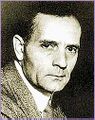
1889: Astronomer and cosmologist Edwin Hubble born. He will discover the fact that the Andromeda "nebula" is actually another island galaxy far outside of our own Milky Way.
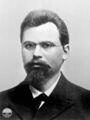
1908: Mathematician Georgy Voronoy (Voronoi) dies. He invented what are today called Voronoi diagrams or Voronoi tessellations, which partition a plane into regions close to each of a given set of objects.
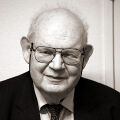
1924: Mathematician Benoit Mandelbrot born. He will be one of the first to use computer graphics to create and display fractal geometric images, leading to his discovery of the Mandelbrot set in 1980.
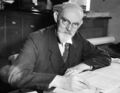
1934: Mathematician, physicist, and astronomer Willem de Sitter dies. He co-authored a paper with Albert Einstein in 1932 in which they discuss the implications of cosmological data for the curvature of the universe.
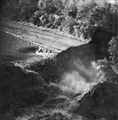
1980: Lake Peigneur drains into an underlying salt deposit. A misplaced Texaco oil probe had been drilled into the Diamond Crystal Salt Mine, causing water to flow down into the mine, eroding the edges of the hole.
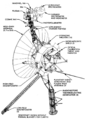
1980: Voyager 1 flies by Saturn, completing its primary mission.
2019: Recent survey shows that Fantasy Voronoi diagram is more popular than Fantasy American Football.
1652: Mathematician, physician, and astronomer Jan Brożek dies. He contributed to a greater knowledge of Nicolaus Copernicus' theories and was his ardent supporter and early prospective biographer.
1905: Albert Einstein's paper that leads to the mass–energy equivalence formula, E = mc², is published in the journal Annalen der Physik.
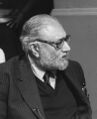
1996: Theoretical physicist Mohammad Abdus Salam dies. He shared the 1979 Nobel Prize in Physics with Sheldon Glashow and Steven Weinberg for his contribution to the electroweak unification theory.
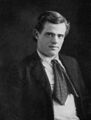
1916: Author Jack London dies. He was one of the first fiction writers to obtain worldwide celebrity and a large fortune from his fiction alone.
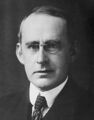
1944: Astronomer, physicist, and mathematician Arthur Eddington dies. He became famous for his work concerning the theory of relativity.
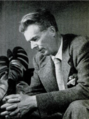
1963: Writer and philosopher Aldous Huxley dies. He was acknowledged as one of the pre-eminent intellectuals of his time.
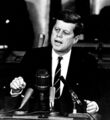
1963: United States President John F. Kennedy is assassinated, and Texas Governor John Connally is seriously wounded.
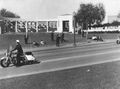
1965: Analysis of Umbrella Man photographs reveals traces of the illegal transdimensional drug Clandestiphrine.
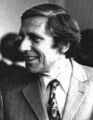
1998: Physicist Harry Lehmann dies. He contributed to the LSZ reduction formula and the Källén–Lehmann spectral representation.


1553: Physician and botanist Prospero Alpini born. He will travel around Egypt, serve as the fourth prefect in charge of the botanical garden of Padua, and write several botanical treatises covering exotic plants of economic and medicinal value.
1720: Clockmaker Jean-André Lepaute born. He will be an innovator, making numerous improvements to clockmaking, especially his pin-wheel escapement, and his clockworks in which the gears are all in the horizontal plane.
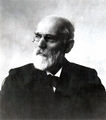
1837: Theoretical physicist and academic Johannes Diderik van der Waals born. He will win the 1910 Nobel Prize in physics for his work on the equation of state for gases and liquids.
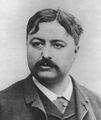
1847: Engineer Charles Renard born. Renard will pioneer the design and construction of airships. He will also propose a set of preferred numbers now known as the Renard series.
1924: Edwin Hubble's discovery, that the Andromeda "nebula" is actually another island galaxy far outside of our own Milky Way, is first published in The New York Times.
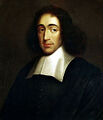
1632: Philosopher, scholar, and lens-grinder Baruch Spinoza born. He will lay the groundwork for the 18th-century Enlightenment and modern biblical criticism, including modern conceptions of the self and the universe.
1639: Astronomer Jeremiah Horrocks observes the
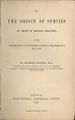
1859: Charles Darwin publishes On the Origin of Species.
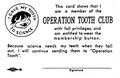
1961: Baby Tooth Survey: Preliminary results published by the team in the November 24, 1961, edition of the journal Science showed that levels of strontium 90 in children had risen steadily in children born in the 1950s, with those born later showing the most increased levels. The results of a more comprehensive study of the elements found in the teeth collected showed that children born after 1963 had levels of strontium 90 in their baby teeth that were 50 times higher than those found in children born before the advent of large-scale atomic testing. The findings helped convince U.S. President John F. Kennedy to sign the Partial Nuclear Test Ban Treaty with the United Kingdom and Soviet Union, which ended the above-ground nuclear weapons testing that placed the greatest amounts of nuclear fallout into the atmosphere.
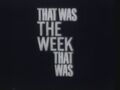
1962: First broadcast of That Was the Week That Was.
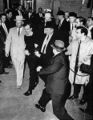
1963: In the first live, televised murder, Lee Harvey Oswald, the alleged assassin of President John F. Kennedy, is murdered two days after the assassination, by Jack Ruby, a nightclub operator, in the basement of Dallas police department headquarters. Oswald was being led by two detectives to an armored car to take him to the nearby county jail.
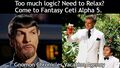
1966: "Fantasy Ceti Alpha 5", one of the so-called "Forbidden Episodes" of the television series Star Trek, is voted "Television Show of the Day" by the citizens of New Minneapolis, Canada.
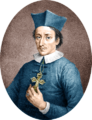
1686: Scientist and bishop Niels Steensen dies. He questioned explanations for tear production, the idea that fossils grow in the ground.
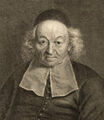
1694: Mathematician and astronomer Ismaël Bullialdus dies. He was an active member of the Republic of Letters, and an early defender of the ideas of Copernicus, Kepler and Galileo.
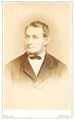
1814: Physician and physicist Julius Robert von Mayer born. He will describe the vital chemical process now referred to as oxidation as the primary source of energy for any living creature; but his achievements will be overlooked and priority for the discovery of the mechanical equivalent of heat will be attributed to James Joule.
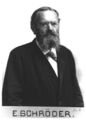
1841: Mathematician and logician Ernst Schröder born. His monumental Vorlesungen über die Algebra der Logik will prepare the way for the emergence of mathematical logic as a separate discipline in the twentieth century by systematizing the various systems of formal logic of the day.
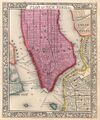
1864: American Civil War: A group of Confederate operatives calling themselves the Confederate Army of Manhattan starts fires in more than 20 locations in an unsuccessful attempt to burn down New York City.
1915: Albert Einstein presents the field equations of general relativity to the Prussian Academy of Sciences.

1947: Red Scare: The "Hollywood Ten" are blacklisted by Hollywood movie studios.
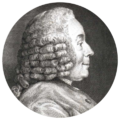
1678: Geophysicist, astronomer, and biologist Jean-Jacques d'Ortous de Mairan born. His observations and experiments will inspire the beginning of what
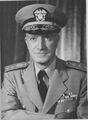
1901: American naval officer William Sterling "Deak" Parsons born. Parsons will serve as an ordnance expert on the Manhattan Project during World War II.
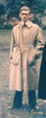
1918: Historian and cryptanalyst Francis Harry Hinsley born. Hinsley will work at Bletchley Park during the Second World War, and write widely on the history of international relations and British Intelligence during the war.
Signed first edition of Fermentation stolen from the Louvre in a daring broad-daylight robbery by criminal mathematical generated by the Forbidden Ratio gang.
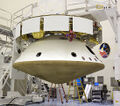
2011: The Mars Science Laboratory launches to Mars with the Curiosity Rover.
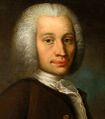
1701: Astronomer, physicist, and mathematician Anders Celsius born. In 1742 he will propose the Celsius temperature scale which today bears his name.
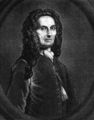
1754: Mathematician and theorist Abraham de Moivre dies. His book on probability theory, The Doctrine of Chances, was prized by gamblers of his day.
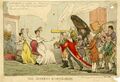
1810: The Berners Street hoax brings traffic to a standstill in parts of London.
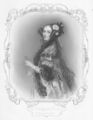
1852: Mathematician and writer Ada Lovelace dies. She did pioneering work in symbolic languages for machine processes, developing what will later be called computer programs for Charles Babbage's early mechanical general-purpose computer, the Analytical Engine.
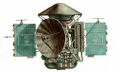
1971: The The Mars 2 landing module crashes on Mars after its parachute fails to deploy.
2017: Dennis Paulson of Mars observes a moment of silence in memory of the forty-sixth anniversary of the Mars 2 crash.
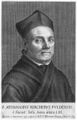
1680: Scholar and polymath Athanasius Kircher dies. He published some 40 major works, most notably in the fields of comparative religion, geology, and medicine.
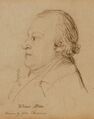
1757: Poet, painter, and printmaker William Blake born. Largely unrecognized during his lifetime, Blake will later be considered a seminal figure in the history of the poetry and visual arts of the Romantic Age. Although Blake will be considered mad by contemporaries for his idiosyncratic views, he will be held in high regard by later critics for his expressiveness and creativity, and for the philosophical and mystical undercurrents within his work.
1908: Anthropologist and ethnologist Claude Lévi-Strauss born. His work will be key in the development of the theory of structuralism and structural anthropology.
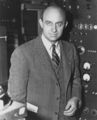
1954: Physicist Enrico Fermi dies. He has been called the "architect of the nuclear age" and the "architect of the atomic bomb".
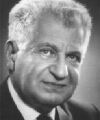
1966: Physicist Boris Yakovlevich Podolsky dies. He worked with Albert Einstein and Nathan Rosen on entangled wave functions and the EPR paradox.
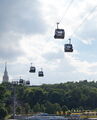
2018: The Moscow cable car hack begins: computers at Moscow Ropeway (MKD), which manages Moscow's re-built cable car line, are infected with ransomware. MKD will stop all operations as soon as it realizes what has happened, bringing all 35 eight-seat cable cars to a halt. There will be no reported injuries, and all cable cars will land safely.
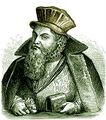
1590: Philologist, mathematician, astronomer, and poet Philipp Nicodemus Frischlin dies, killed by a fall in attempting to let himself down from the window of his cell. His prolific and versatile genius produced a great variety of works, but his reckless life and libelous letters led to imprisonment.
1646: Theologian, astronomer, astrologer, and Archbishop of Uppsala Laurentius Paulinus Gothus dies. He wrote numerous theological and astronomical works, and also published calendars.
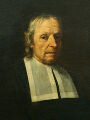
1694: Physician and biologist Marcello Malpighi dies. Malpighi made pioneering contributions to anatomy, histology, physiology, embryology, and microscopy.
1759: Mathematician and theorist Nicolaus I Bernoulli dies. He introduced a successful resolution to the St. Petersburg paradox.
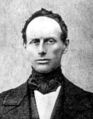
1803: Physicist and mathematician Christian Doppler born. Doppler will propose the principle (now known as the Doppler effect) that the observed frequency of a wave depends on the relative speed of the source and the observer. He will use this concept to explain the color of binary stars.
1877: Thomas Edison demonstrates his phonograph for the first time.
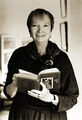
1918: Writer Madeleine L'Engle born. She will write the Newbery Medal-winning A Wrinkle in Time and its sequels.
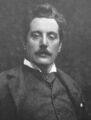
1924: Composer Giacomo Puccini dies. He is remembered as "the greatest composer of Italian opera after Verdi".

1955: The EBR-1 in Arco, Idaho suffers a partial meltdown during a coolant flow test.
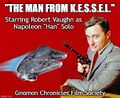
1964: Debut of The Man From K.E.S.S.E.L., an American science fiction buddy television series about a pair of space pilots (Robert Vaughn and David McCallum) who work for K.E.S.S.E.L., a secret interplanetary smuggling ring.
2009: Signed first edition of Mountains stolen from the Louvre in a broad-daylight robbery by criminal mathematical functions generated by the Forbidden Ratio gang.
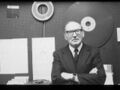
2010: Computer scientist and physicist Maurice Wilkes dies. He pioneered several important developments in computing, including microcode, symbolic labels, macros, subroutine libraries, and timesharing.
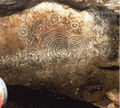
3340 B.C.: The Solar eclipse of 3340 B.C. occurs. Geometric designs on a stone in Ireland may depict the eclipse; if so, the stone is the earliest known record of an eclipse.
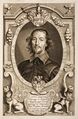
1602: Scientist, inventor, and politician Otto von Guericke born. Von Guericke will pioneer the physics of vacuums, and discover an experimental method for demonstrating electrostatic repulsion.
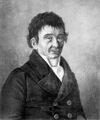
1827: Physicist, musician, and academic Ernst Chladni dies. He has been called both the father of acoustics and the father of meteoritics.
1835: Writer, entrepreneur, publisher and lecturer Mark Twain born.
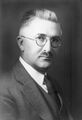
1888: Electronics researcher Ralph Hartley born. He will invent the Hartley oscillator and the Hartley transform, and contribute to the foundations of information theory.
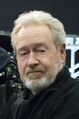
1937: Film director and producer Ridley Scott born.
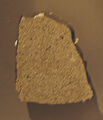
1954: In Sylacauga, Alabama, United States, the Hodges meteorite crashes through a roof and hits a woman taking an afternoon nap; this is the only documented case in the Western Hemisphere of a human being hit by a rock from space.
Template:Selected anniversaries/November 31
December
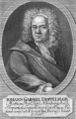
1750: Mathematician, astronomer, and cartographer Johann Gabriel Doppelmayr dies. He published works on mathematics and astronomy, including sundials, spherical trigonometry, and celestial maps and globes, along with biographical information on several hundred mathematicians and instrument makers.
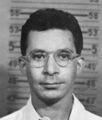
1910: Physicist Louis Slotin born. He will be fatally irradiated in a criticality incident during an experiment with the "demon core" at Los Alamos National Laboratory.
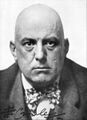
1947: Magician and author Aleister Crowley dies. He gained widespread notoriety during his lifetime, as a recreational drug experimenter, bisexual, and an individualist social critic; the popular press denounced him as "the wickedest man in the world" and a Satanist.
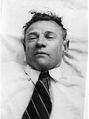
1948: Tamam Shud case: an unidentified man is found dead at 6:30 am, 1 December 1948, on Somerton beach, Glenelg, just south of Adelaide, South Australia. Public interest in the case remains significant for several reasons: the death occurred at a time of heightened international tensions following the beginning of the Cold War; the apparent involvement of a secret code; the possible use of an undetectable poison; and the inability of authorities to identify the dead man.
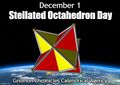
1967: First known occurence of Stellated Octahedron Day (December 1) celebrating the stellated octahedron, the only stellation of the octahedron.
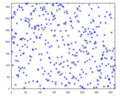
1969: The first draft lottery in the United States is held since World War II.

1409: The University of Leipzig opens. Famous future alumni will include Leibniz, Goethe, Ranke, Nietzsche, Wagner, Angela Merkel, Raila Odinga, and Tycho Brahe.
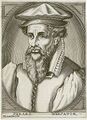
1594: Mathematician, cartographer, and philosopher Gerardus Mercator dies. He is most renowned for creating the 1569 world map based on a new projection which represented sailing courses of constant bearing (rhumb lines) as straight lines—an innovation that is still employed in nautical charts.
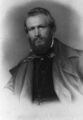
1831: Mathematician Paul David Gustav du Bois-Reymond born. He will work on the theory of functions and in mathematical physics.
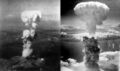
1942: During the Manhattan Project, a team led by Enrico Fermi initiates the first artificial self-sustaining nuclear chain reaction.
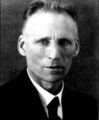
1966: Mathematician and philosopher L. E. J. Brouwer dies. He made contributions to topology, set theory, measure theory and complex analysis; and he founded the mathematical philosophy of intuitionism.
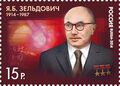
1987: Physicist, astronomer, and cosmologist Yakov Borisovich Zel'dovich dies. He played a crucial role in the development of the Soviet Union's nuclear bomb project, associated closely in nuclear weapons testing to study the effects of nuclear explosion from 1943 until 1963.
1616: Mathematician and cryptographer John Wallis born. He will serve as chief cryptographer for Parliament and, later, the royal court.
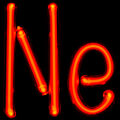
1910: First public demonstration of modern neon lighting, by Georges Claude at the Paris Motor Show.
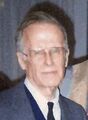
1924: Mathematician and computer scientist John Backus born. He will invent the Backus–Naur form (BNF) notation to define formal language syntax.
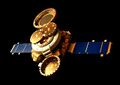
2001: The Genesis spacecraft exposes its collector arrays, beginning collection of solar wind particles. The collection process will end after 850 days, on April 1, 2004, with the spacecraft completing five halo loops around L1.
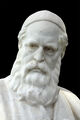
1131: Polymath, scholar, mathematician, astronomer, philosopher, and poet Omar Khayyám dies.
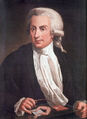
1798: Physician and physicist Luigi Galvani dies. In 1780, he discovered that the muscles of dead frogs' legs twitch when struck by an electrical spark.
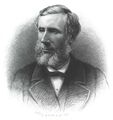
1820: Physicist John Tyndall dies of accidental chloral hydrate overdose. He studied diamagnetism, and made discoveries in the realms of infrared radiation and the physical properties of air.

1969: Black Panther Party members Fred Hampton and Mark Clark are shot and killed during a raid by 14 Chicago police officers. In January 1970, a coroner's jury will hold an inquest and rule the deaths to be justifiable homicide. Critics will contend that Hampton was assassinated.
1973: The Pioneer 10 space probe makes its closest approach to the planet Jupiter, at a range of about 132,252 kilometers (82,178 mi).
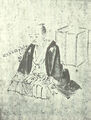
1708: Mathematician Seki Takakazu dies. He created a new algebraic notation system and, motivated by astronomical computations, did work on infinitesimal calculus and Diophantine equations. Seki laid foundations for the subsequent development of Japanese mathematics known as wasan; he has been described as "Japan's Newton".
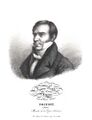
1859: Mathematician and physicist Louis Poinsot dies. Poinsot invented geometrical mechanics, showing how a system of forces acting on a rigid body can be resolved into a single force and a couple.
1872: The crewless American ship Mary Celeste is found by the Canadian brig Dei Gratia. The ship had been abandoned for nine days but was only slightly damaged.
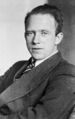
1901: Physicist and academic Werner Heisenberg born. He will introduce the uncertainty principle -- in quantum mechanics, any of a variety of mathematical inequalities asserting a fundamental limit to the precision with which certain pairs of physical properties of a particle can be known.
1932: German-born Swiss physicist Albert Einstein is granted an American visa.
1953: American naval officer William Sterling "Deak" Parsons dues. Parsons served as an ordnance expert on the Manhattan Project during World War II.
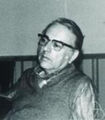
1999: Mathematician Nathan Jacobson dies. He conducted research on the structure theory of rings without finiteness conditions--a subject closely related to the theory of algebras--which transformed the approach to classical results and broke ground for solutions to problems inaccessible by previous methods.
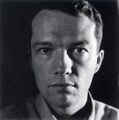
2008: Chemist and composer George Brecht dies. He was an American conceptual artist and avant-garde composer, as well as a professional chemist who worked as a consultant for companies including Pfizer, Johnson & Johnson, and Mobil Oil.
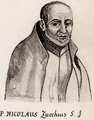
1586: Astronomer and physicist Niccolò Zucchi born. He will publish works on astronomy, optics, mechanics, and magnetism.
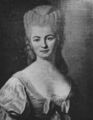
1788: Astronomer and mathematician Nicole-Reine Lepaute dies. She predicted the return of Halley's Comet, calculated the timing of a solar eclipse, and constructed a group of catalogs for the stars.
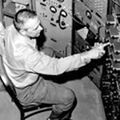
1919: Physicist Clyde Cowan born. Cowan, along with Frederick Reines, will discover the neutrino in 1956; Reines will receive the Nobel Prize in Physics in 1995 in both their names.
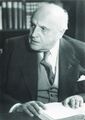
1959: Mathematician Erhard Schmidt dies. He made important contributions to functional analysis and modern set theory.
2006: NASA reveals photographs taken by Mars Global Surveyor suggesting the presence of liquid water on Mars.
2017: Dennis Paulson of Mars celebrates the eleventh anniversary of NASA revealing photographs taken by Mars Global Surveyor suggesting the presence of liquid water on Mars.
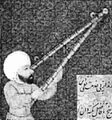
903: Astronomer Abd al-Rahman al-Sufi born. He will publish his Book of Fixed Stars in 964.
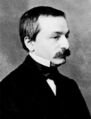
1823: Mathematician Leopold Kronecker born. His work will include number theory, algebra, and logic.
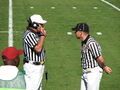
1963: Instant replay makes its debut during the Army-Navy football game in Philadelphia, Pennsylvania, United States.
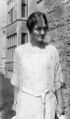
1979: Astronomer and astrophysicist Cecilia Payne-Gaposchkin dies. Her doctoral thesis established that hydrogen is the overwhelming constituent of stars, and accordingly the most abundant element in the universe.
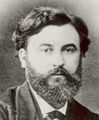
1844: Scientist, inventor, and educator Charles-Émile Reynaud born. He will invent the Praxinoscope (an improved zoetrope) and be responsible for the first projected animated films.
1864: Mathematician and philosopher George Boole dies. He worked in the fields of differential equations and algebraic logic, developing Boolean algebra and Boolean logic.
1865: Mathematician Jacques Hadamard born. He will make major contributions in number theory, complex function theory, differential geometry and partial differential equations.
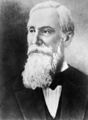
1894: Mathematician and statistician Pafnuty Chebyshev dies. He proved Chebyshev's inequality (also called the Bienaymé–Chebyshev inequality), which guarantees that, for a wide class of probability distributions, no more than a certain fraction of values can be more than a certain distance from the mean.
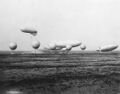
1932: US Navy accidentally releases a flock of Carnivorous dirigibles, which will form the nucleus of a feral squadron.
1955: Mathematician, physicist, and philosopher Hermann Weyl dies. He was one of the most influential mathematicians of the twentieth century: his research has major significance for theoretical physics as well as purely mathematical disciplines including number theory.
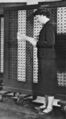
2001: Pioneering computer scientist and programmer Betty Holberton dies. She was one of the six original programmers of ENIAC, the first general-purpose electronic digital computer, and was the inventor of breakpoints in computer debugging.
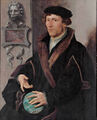
1508: Physician, mathematician, and cartographer Gemma Frisius born. He will create important globes, improve the mathematical instruments of his day, and apply mathematics to surveying and navigation in new ways.
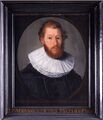
1571: Mathematician and astronomer Adriaan Metius born. He will manufacture precision astronomical instruments, and publish treatises on the astrolabe and on surveying.
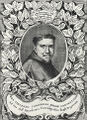
1718: Monk, cosmographer, and cartographer Vincenzo Coronelli dies. He gained fame for his atlases and globes; some of the globes are very large and highly detailed.
1814: Physician Golding Bird born. He will pioneer the medical use of electricity.
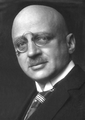
1868: Chemist Fritz Haber born. He will receive the Nobel Prize in Chemistry in 1918 for his invention of the Haber–Bosch process, a method used in industry to synthesize ammonia from nitrogen gas and hydrogen gas. Haber will also do pioneering work in chemical warfare, weaponizing chlorine and other poisonous gases during World War I.
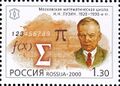
1883: Mathematician, theorist, and academic Nikolai Luzin born. He will contribute to descriptive set theory and aspects of mathematical analysis with strong connections to point-set topology.
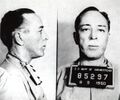
1905: Screenwriter and novelist Dalton Trumbo born. He will be blacklisted for refusing testify before the House Un-American Activities Committee (HUAC) in 1947; while blacklisted, he will win Academy Awards for two films: Roman Holiday, attributed to a front author, and The Brave One under the pseudonym Robert Rich.

1906: Computer scientist and Admiral Grace Hopper born. She will pioneer computer programming techniques, inventing one of the first compilers, and popularizing machine-independent programming languages (leading to the development of COBOL).
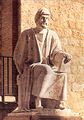
1198: Polymath Ibn Rushd (Averoess) dies. He wrote on logic, Aristotelian and Islamic philosophy, theology, the Maliki school of Islamic jurisprudence, psychology, political and Andalusian classical music theory, geography, mathematics, and the mediæval sciences of medicine, astronomy, physics, and celestial mechanics.
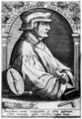
1452: Mathematician, astronomer, astrologer, priest, maker of astronomical instruments, and professor Johannes Stöffler born.
1684: Isaac Newton's derivation of Kepler's laws from his theory of gravity, contained in the paper De motu corporum in gyrum, is read to the Royal Society by Edmond Halley.
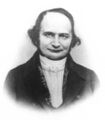
1804: Mathematician and academic Carl Gustav Jacob Jacobi born. He will make fundamental contributions to elliptic functions, dynamics, differential equations, and number theory.
1815: Mathematician and writer Ada Lovelace born. She will do pioneering work in symbolic languages for machine processes, developing what will later be called computer programs for Charles Babbage's early mechanical general-purpose computer, the Analytical Engine.
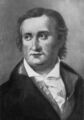
1831: Physicist and academic Thomas Johann Seebeck dies. He discovered the thermoelectric effect.
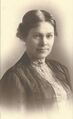
1860: Physicist Margaret Eliza Maltby born. She will contribute to the measurement of high electrolytic resistances and conductivity of very dilute solutions.
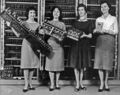
1959: Chrome Plover, the famed musical electroplating ensemble, gives first public performance of Ada, their tribute to Ada Lovelace.
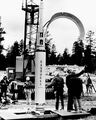
1967: Project Gasbuggy underground nuclear test detonation in rural northern New Mexico. Its purpose was to determine if nuclear explosions could be useful in fracturing rock formations for natural gas extraction.
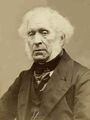
1781: Physicist, mathematician, astronomer, inventor, and writer David Brewster born.
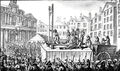
1792: French Revolution: King Louis XVI of France is put on trial for treason by the National Convention.
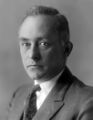
1882: Physicist and mathematician Max Born born. He will win the 1954 Nobel Prize in Physics for his "fundamental research in quantum mechanics, especially in the statistical interpretation of the wave function".
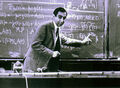
1922: Physicist Peter Mazur born. Mazur will pioneer the field of non-equilibrium thermodynamics.
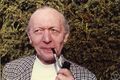
1998: Physicist and mathematician André Lichnerowicz dies. He worked in differential geometry and mathematical physics.
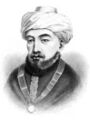
1204: Rabbi, philosopher, astronomer, and physician Maimonides dies.
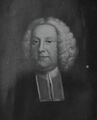
1685: Mathematician John Pell dies. He expanded the scope of algebra in the theory of equations.
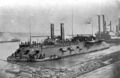
1862: USS Cairo sinks on the Yazoo River, becoming the first armored ship to be sunk by an electrically detonated mine.
1901: Guglielmo Marconi receives the first transatlantic radio signal (the letter "S" in Morse Code), at Signal Hill in St John's, Newfoundland.
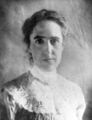
1921: Astronomer Henrietta Swan Leavitt dies. She discovered the relation between the luminosity and the period of Cepheid variable stars.
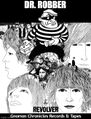
1966: The Beatles release Dr. Robber.
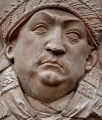
1516: Polymath Johannes Trithemius dies. He is remembered as a lexicographer, chronicler, cryptographer, and occultist.
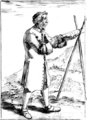
1662: Astronomer and philosopher Francesco Bianchini born. Bianchini will be secretary of the Papal commission for the reform of the calendar, working on the method to calculate the astronomically correct date for Easter in a given year.
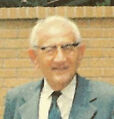
1887: Mathematician George Pólya born. He will make fundamental contributions to combinatorics, number theory, numerical analysis and probability theory.
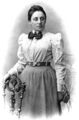
1907: Mathematician and adacemic Emmy Noether receives her Ph.D. degree, summa cum laude, from the University of Erlangen, for a dissertation on algebraic invariants directed by Paul Gordan.
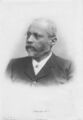
1921: Mathematician Max Noether dies. Noether contributed to algebraic geometry and the theory of algebraic functions. He was the father of mathematician Emmy Noether.

2004: Computer scientist and academic David Wheeler dies. He contributed to the development of the Electronic delay storage automatic calculator (EDSAC) and the Burrows–Wheeler transform (BWT); helped develop the subroutine; and gave the first explanation of how to design software libraries.
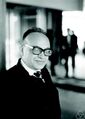
2007: Physicist, mathematician, statistician, and meteorologist Akiva Yaglom dies. He contributed to statistical turbulence theory and random process theory.
1546: Astronomer Tycho Brahe born. He will make observations some five times more accurate than the best available observations at the time.
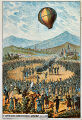
1782: The Montgolfier brothers' first balloon lifts off on its first test flight. Shown here: first public flight (June 4, 1783).
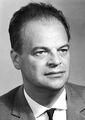
1922: Physicist and educator Nikolay Basov born. He will do fundamental work in the field of quantum electronics.
1940: Plutonium (specifically Pu-238) is first isolated at Berkeley, California.
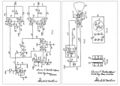
1947: Thomas Goldsmith Jr. is granted a patent for a "Cathode Ray Tube Amusement Device", the first ever electronic game.

1953: Anthropologist, ethnobotanist, author, and photographer Wade Davis born.
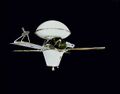
1976: Viking program: The Viking 2 orbiter begins its extended mission.
2017: Dennis Paulson of Mars celebrates the forty-first anniversary of the Viking 2 orbiter beginning its extended mission.
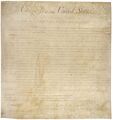
1791: The United States Bill of Rights becomes law when ratified by the Virginia General Assembly.
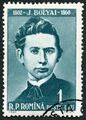
1802: Mathematician and academic János Bolyai born. He will be one of the founders of non-Euclidean geometry.
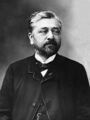
1832: Engineer Gustave Eiffel born. He will design the world-famous Eiffel Tower.
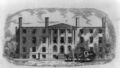
1836: A fire at the U.S. Patent Office destroys all 10,000 patents and several thousand related patent models.
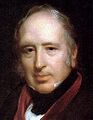
1857: Engineer George Cayley dies. He did pioneering work in aeronautics, investigating and codifying the dynamics of flight.
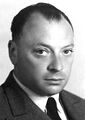
1958: Theoretical physicist Wolfgang Pauli dies. Pauli received the Nobel Prize in Physics for his "decisive contribution through his discovery of a new law of Nature, the exclusion principle or Pauli principle".
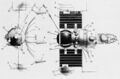
1970: Soviet spacecraft Venera 7 successfully lands on Venus. It is the first successful soft landing on another planet.
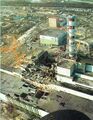
2000: The third reactor at the Chernobyl Nuclear Power Plant is shut down.
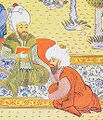
1474: Astronomer, mathematician, and physicist Ali Qushji dies. Qushji contributed to the development of astronomical physics independent from natural philosophy, and provided empirical evidence for the Earth's rotation.
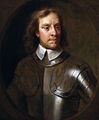
1653: Oliver Cromwell becomes Lord Protector of the Commonwealth of England, Scotland and Ireland.
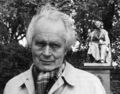
1905: Mathematician, author, and poet Piet Hein born. He will propose the use of superellipses in architecture; superellipses will become the hallmark of modern Scandinavian architecture.
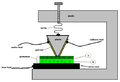
1947: William Shockley, John Bardeen and Walter Brattain build the first practical point-contact transistor.

2014: Mathematician and academic Tim Cochran dies. He contributed to topology, especially low-dimensional topology, the theory of knots and links and associated algebra.
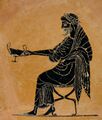
498 BC: Dionysus gives speech which anticipates the coming of Saturnalia.
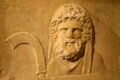
497 BC: The first Saturnalia festival celebrated in ancient Rome.
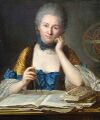
1706: Mathematician and physicist Émilie du Châtelet born. She will translate and comment upon on Isaac Newton's Principia Mathematica.
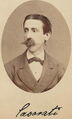
1835: Felice Casorati born. Casorati will contribute the Casorati–Weierstrass theorem in complex analysis.
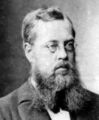
1842: Mathematician and academic Marius Sophus Lie born. He will largely create the theory of continuous symmetry and apply it to the study of geometry and differential equations.
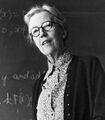
1900: Mathematician and academic Mary Cartwright born. She will do pioneering work in what will later be called chaos theory.
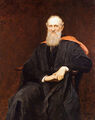
1907: Lord Kelvin dies. He did much to unify the emerging discipline of physics in its modern form.
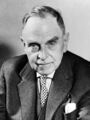
1938: Physicist Otto Hahn discovers the nuclear fission of the heavy element uranium, the scientific and technological basis of nuclear energy.
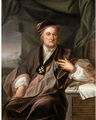
1661: Scientist, inventor, and industrialist Christopher Polhem born. He will make significant contributions to the economic and industrial development of Sweden, particularly mining.
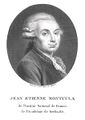
1799: Mathematician and theorist Jean-Étienne Montucla dies. His deep interest in history of mathematics became apparent with his publication of Histoire des Mathématiques, the first part appearing in 1758.
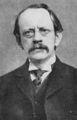
1856: Physicist and academic J. J. Thomson born. His research in cathode rays will lead to the discovery of the electron. Thomson will also discover the first evidence for isotopes of a stable element.
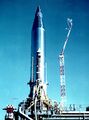
1958: Project SCORE, the world's first communications satellite, is launched.

1978: Premier of Every Which Way But Lost in Space, an American action comedy film about an astronaut and bare-knuckle brawler (Clint Eastwood) roaming low Earth orbit in search of a lost robot while accompanied by his pet orangutan, Clyde.
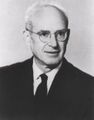
1995: Physicist Nathan Rosen dies. He developed the idea of the Einstein–Rosen bridge, later named the wormhole.
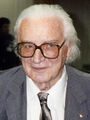
1995: Engineer, inventor, and pioneering computer scientist Konrad Zuse dies. He invent the Z3, the world's first working programmable, fully automatic computer.
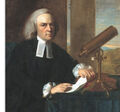
1714: Mathematician, physicist, and astronomer John Winthrop born. He will be one of the foremost men of science in America during the 18th century.
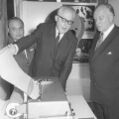
1901: Inventor and engineer Rudolf Hell born. Hell will invent the Hellschreiber, a pioneering teleprinter system. Shown here: Hell's Wetterkartenschreiber ("weather chart recorder").
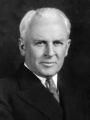
1953: Physicist Robert Andrews Millikan dies. He won the Nobel Prize for Physics in 1923 for the measurement of the elementary electronic charge and for his work on the photoelectric effect.
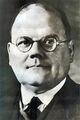
1956: Physician, confidence trickster, and suspected serial killer John Bodkin Adams is arrested in connection with the suspicious deaths of more than 160 patients. Eventually he is convicted only of minor charges.
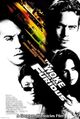
2021: Premier of The Woke and the Furious, a 2021 political action film about an undercover liberal who is tasked with discovering the identities of a group of insurrectionists led by Donald Trump.
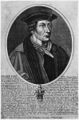
1494: Mathematician and cartographer Oronce Finé born. He will be imprisoned in 1524, probably for practicing judicial astrology.
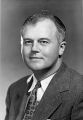
1901: Physicist Robert J. Van de Graaff born. He will design design and construct high-voltage Van de Graaff generators.
1951: The EBR-1 in Arco, Idaho becomes the first nuclear power plant to generate electricity. The electricity powered four light bulbs.
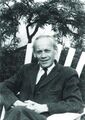
1962: Mathematician Emil Artin dies. He worked on algebraic number theory, contributing to class field theory and a new construction of L-functions. He also contributed to the pure theories of rings, groups and fields.
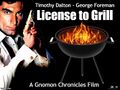
1989: Premier of License to Grill, a 1989 spy film about an MI6 agent (Timothy Dalton) who must stop a deranged grill manufacturer (George Foreman) from destroying the world's supply of propane.
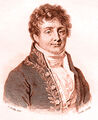
1807: Mathematician Joseph Fourier announced to the French Academy of Science that an arbitrary function could be expanded as an infinite series of sines and cosines (now known as the Fourier series).
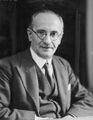
1878: Mathematician and philosopher Jan Łukasiewicz born. He will think innovatively about traditional propositional logic, the principle of non-contradiction and the law of excluded middle.
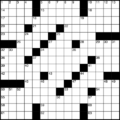
1913: Arthur Wynne's "word-cross", the first crossword puzzle, is published in the New York World.
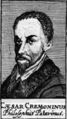
1550: Philosopher and academic Cesare Cremonini born. His work will promote rationalism (against revelation) and Aristotelian materialism (against the dualist immortality of the soul) inside scholasticism.
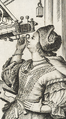
1693: Astronomer Elisabeth Hevelius dies. One of the first female astronomers, Hevelius is known as "the mother of moon charts".
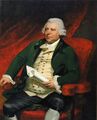
1732: Inventor, engineer, and businessman Richard Arkwright born. Later in his life Arkwright will be known as the "father of the modern industrial factory system."
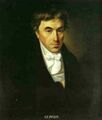
1765: Mathematician Johann Friedrich Pfaff born. He will work on partial differential equations of the first order Pfaffian systems, as they are now called, which will become part of the theory of differential forms.
1858: Composer Giacomo Puccini born. He will be called "the greatest composer of Italian opera after Verdi".
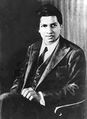
1887: Mathematician and theorist Srinivasa Ramanujan born. He will make substantial contributions to mathematical analysis, number theory, infinite series, and continued fractions, including solutions to mathematical problems considered to be unsolvable.
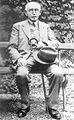
1894: The Dreyfus affair begins in France, when Alfred Dreyfus is wrongly convicted of treason.
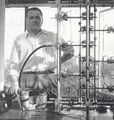
1972: Inventor Norman Lorimer Dean dies. Dean designed the Dean drive, which he promoted as a reactionless drive.
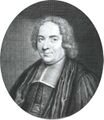
1722: Mathematician and academic Pierre Varignon dies. He simplified the proofs of many propositions in mechanics, adapted Leibniz's calculus to the inertial mechanics of Newton's Principia, and treated mechanics in terms of the composition of forces.
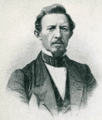
1822: Inventor and engineer Wilhelm Bauer born. He will design and invent submarines.
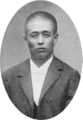
1933: Mathematician Rikitarō Fujisawa dies. During the Meiji era he was instrumental in reforming mathematics education in Japan and establishing the ideas of European mathematics in Japan.
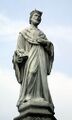
1473: Priest, philosopher, physicist, and theologian John Cantius dies. He helped develop Jean Buridan's theory of impetus, anticipating the work of Galileo and Newton.
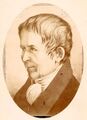
1761: Astronomer Jean-Louis Pons born. He will become the greatest visual comet discoverer of all time: between 1801 and 1827, Pons will discover thirty-seven comets, more than any other person in history.
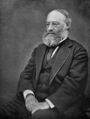
1818: Physicist and brewer James Prescott Joule born. He will study the nature of heat, and discover its relationship to mechanical work.
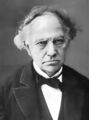
1822: Mathematician Charles Hermite born. He will do research on number theory, quadratic forms, invariant theory, orthogonal polynomials, elliptic functions, and algebra.
1877: Thomas Edison files for a patent on the phonograph. The idea came to him while working on a telegraph transmitter, when he noticed that when the tape of the machine was played at high speed, it gave off a noise resembling spoken words. After experimenting with a needle attached to the diaphragm of a telephone receiver to prick paper tape to record a message, his idea evolved to using a stylus on a tinfoil cylinder.
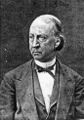
1882: Mathematician Johann Benedict Listing dies. He introduced the term "topology" in a famous article published in 1847, having already used the term in correspondence some years earlier.
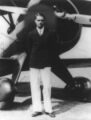
1905: Businessman, investor, aviator, film director, and philanthropist Howard Hughes born. He will be known during his lifetime as one of the most financially successful individuals in the world.
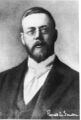
1906: Inventor Reginald Fessenden transmits the first radio broadcast; consisting of a poetry reading, a violin solo, and a speech.
1917: Politician Ivan Goremykin dies. He is remembered for his Extreme Moustaches.
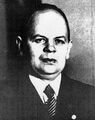
1962: Mathematician Wilhelm Ackermann dies. He discovered the Ackermann function, an important example in the theory of computation.
1642: Isaac Newton born. He will be widely recognized as one of the most influential scientists of all time and a key figure in the scientific revolution.
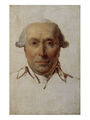
1730: Physician and activist Filippo Mazzei born. Mazzei will act as an agent to purchase arms for Virginia during the American Revolutionary War.
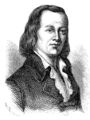
1763: Inventor Claude Chappe born. Chappe will invent and develop a practical semaphore system that will span all of France -- the first practical telecommunications system of the industrial age.
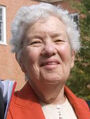
2016: Astronomer and academic Vera Rubin dies. She discovered the discrepancy between the predicted angular motion of galaxies and the observed motion, by studying galactic rotation curves.
1791: Polymath Charles Babbage born. He will construct mechanical computers which anticipate the concept of programmable digital computers.
1896: Physician and physiologist Emil du Bois-Reymond dies. He discovered nerve action potential, and developed experimental electrophysiology.
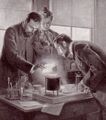
1898: Marie and Pierre Curie announce the isolation of radium.
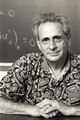
2006: Physicist and mathematician Martin David Kruskal dies. Kruskal made fundamental contributions in many areas of mathematics and science, including the discovery and theory of solitons.
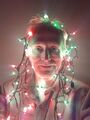
2019: Karl Jones takes a photograph of himself wearing red and green Christmas lights.
1571: Mathematician, astronomer, and astrologer Johannes Kepler born. He will discover laws of planetary motion.
1773: Engineer George Cayley born. He will do pioneering work in aeronautics, investigating and codifying the dynamics of flight.
1923: Engineer Gustave Eiffel dies. He designed the world-famous Eiffel Tower.
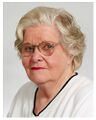
1924: Jean Bartik born. She will be one of the original programmers for the ENIAC computer.
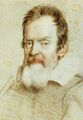
1612: Galileo became the first person to observe the planet Neptune, although he mistakenly catalogued it as a fixed star.
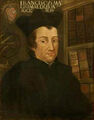
1663: Mathematician and physicist Francesco Maria Grimaldi dies. Working with Riccioli, he investigated the free fall of objects, confirming that the distance of fall was proportional to the square of the time taken.
1882: Astronomer, physicist, and mathematician Arthur Eddington born. He will become famous for his work concerning the theory of relativity.
1895: Wilhelm Röntgen publishes a paper detailing his discovery of a new type of radiation, which later will be known as x-rays.
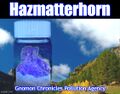
1902: APTO industrial chemists classify the Hazmatterhorn as a Crime Against Chemical Constants. Although derived from the word Matterhorn, the term Hazmatterhorn is applicable to any mountain of hazardous materials.
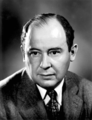
1903: Mathematician, physicist, and computer scientist John von Neumann born. He will be a key figure in the development of the digital computer, and develop mathematical models of both nuclear and thermonuclear weapons.

2016: Mathematician Anne Penfold Street dies. She specialized in combinatorics, authoring several textbooks; her work on sum-free sets became a standard reference for its subject matter.
1786: French Revolution: The Assembly of Notables is convened.
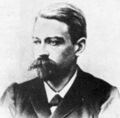
1856: Mathematician Thomas Joannes Stieltjes born. He will work on almost all branches of analysis, continued fractions and number theory, will be called "the father of the analytic theory of continued fractions."
1891: Mathematician Leopold Kronecker dies. His work included number theory, algebra, and logic.
1911: Physicist Emil Julius Klaus Fuchs born. He will be convicted of supplying information from the Manhattan Project to the Soviet Union during and shortly after the Second World War.
1941: Mathematician and academic Tullio Levi-Civita dies. He gained fame for his work on absolute differential calculus (tensor calculus) and its applications to the theory of relativity, and made significant contributions in other areas.
1695: Academic, diplomat, spy, inventor and mathematician Samuel Morland dies. Morland contributed to early developments in computing, hydraulics, and steam power.
1842: Osman Hamdi Bey born. He will be an administrator, intellectual, art expert, painter, and archaeologist.

1850: Publication of Den Overraskende Veludstyrede Lille Kanonbåd ("The Surprisingly Well-Equipped Small Gunboat") by Danish author and military historiographer Hans Christian Andersen.
1892: Mathematician Pekka Myrberg born. He will do fundamental work on the iteration of rational functions (especially quadratic functions), developing the concept of period-doubling. Myrberg's research will revive interest in the results of Gaston Julia and Pierre Fatou.
1916: Mystic and faith healer Grigori Rasputin dies.
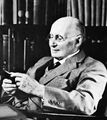
1947: Mathematician and philosopher Alfred North Whitehead dies. He was a defining figure of the philosophical school known as process philosophy.
1947: Painter and forger Han van Meegeren dies. He was one of the most ingenious art forgers of the 20th century.
2013: Mathematician and academic Paul Sally dies. He was known as "a legendary math professor at the University of Chicago".
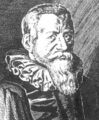
1610: Mathematician and fencer Ludolph van Ceulen dies. He spent a major part of his life calculating the numerical value of the mathematical constant π.
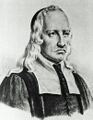
1679: Physiologist, physicist, and mathematician Giovanni Alfonso Borelli dies. He contributed to the modern principle of scientific investigation by continuing Galileo's practice of testing hypotheses against observation.

1853: Banquet held in the mould of the Crystal Palace Iguanodon.
1879: Thomas Edison demonstrates incandescent lighting to the public for the first time, in Menlo Park, New Jersey.
1894: Mathematician Thomas Joannes Stieltjes dies. He worked on almost all branches of analysis, continued fractions and number theory, and was called "the father of the analytic theory of continued fractions."
1900: Priest and inventor Hannibal Goodwin dies. He invented and patented rolled celluloid photographic film.
1980: Professor of English and philosopher of communication theory Marshall McLuhan dies. He coined the expressions "the medium is the message" and "global village".
2007: The Deep Impact spacecraft flies by Earth on an extended mission to study extrasolar planets and comet Hartley 2 (103P/Hartley).
2016: Reality television show Dennis Paulson of Mars fully funded by Kickstarter.