Template:Selected anniversaries/September 9: Difference between revisions
From Gnomon Chronicles
No edit summary |
No edit summary |
||
| Line 2: | Line 2: | ||
|File:Adriaan Metius.jpg|link=Adriaan Metius (nonfiction)|1634: Mathematician and astronomer [[Adriaan Metius (nonfiction)|Adriaan Metius]] develops new type of precision astronomical instruments incorporating [[Gnomon algorithm functions]], which he uses to preview and prevent [[crimes against mathematical constants]]. | |File:Adriaan Metius.jpg|link=Adriaan Metius (nonfiction)|1634: Mathematician and astronomer [[Adriaan Metius (nonfiction)|Adriaan Metius]] develops new type of precision astronomical instruments incorporating [[Gnomon algorithm functions]], which he uses to preview and prevent [[crimes against mathematical constants]]. | ||
||1737 – Luigi Galvani, Italian physician and physicist (d. 1798) | |||
||1839 – John Herschel takes the first glass plate photograph. | |||
||1892 – Amalthea, third moon of Jupiter is discovered by Edward Emerson Barnard. | |||
File:Georg Cantor 1894.png|link=Georg Cantor (nonfiction)|1917: Mathematician and philosopher [[Georg Cantor (nonfiction)|Georg Cantor]] publishes new [[Set theory (nonfiction)|theory of sets]] derived from [[Gnomon algorithm functions]]. Colleagues hail it as "a magisterial contribution to science and art of detecting and preventing [[crimes against mathematical constants]]." | File:Georg Cantor 1894.png|link=Georg Cantor (nonfiction)|1917: Mathematician and philosopher [[Georg Cantor (nonfiction)|Georg Cantor]] publishes new [[Set theory (nonfiction)|theory of sets]] derived from [[Gnomon algorithm functions]]. Colleagues hail it as "a magisterial contribution to science and art of detecting and preventing [[crimes against mathematical constants]]." | ||
||1920 – Feng Kang, Chinese mathematician and physicist (d. 1993) | |||
||1922 – Hans Georg Dehmelt, German-American physicist and academic, Nobel Prize laureate (d. 2017) | |||
|File:Wild Man in Hydrogen Bubble Chamber.jpg|link=Time travel (nonfiction)|1934: [[Time travel (nonfiction)|Time travel device]] hijacked, used to commit new class of [[crimes against mathematical constants]]. | |File:Wild Man in Hydrogen Bubble Chamber.jpg|link=Time travel (nonfiction)|1934: [[Time travel (nonfiction)|Time travel device]] hijacked, used to commit new class of [[crimes against mathematical constants]]. | ||
||1941 – Dennis Ritchie, American computer scientist, created the C programming language (d. 2011) | |||
|File:Exponential-growth-diagram.svg|link=Crimes against mathematical constants|1942: "Conspiracy theories of about [[crimes against mathematical constants]] have yet to prove their case." | |File:Exponential-growth-diagram.svg|link=Crimes against mathematical constants|1942: "Conspiracy theories of about [[crimes against mathematical constants]] have yet to prove their case." | ||
||1947 – First case of a computer bug being found: A moth lodges in a relay of a Harvard Mark II computer at Harvard University. | |||
File:George_Pólya_circa_1973.jpg|link=George Pólya (nonfiction)|1984: Mathematician [[George Pólya (nonfiction)|George Pólya]] publishes new class of [[Gnomon algorithm functions]], based on combinatorics and probability theory, which detect and prevent [[crimes against mathematical constants]]. | |||
||1985 – Paul Flory, American chemist and engineer, Nobel Prize laureate (b. 1910) | |||
||2003 – Edward Teller, Hungarian-American physicist and academic (b. 1908) | |||
</gallery> | </gallery> | ||
Revision as of 16:09, 4 July 2017
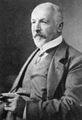
1917: Mathematician and philosopher Georg Cantor publishes new theory of sets derived from Gnomon algorithm functions. Colleagues hail it as "a magisterial contribution to science and art of detecting and preventing crimes against mathematical constants."
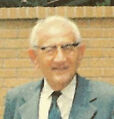
1984: Mathematician George Pólya publishes new class of Gnomon algorithm functions, based on combinatorics and probability theory, which detect and prevent crimes against mathematical constants.