Template:Selected anniversaries/February 8: Difference between revisions
No edit summary |
No edit summary |
||
| (30 intermediate revisions by the same user not shown) | |||
| Line 1: | Line 1: | ||
<gallery> | <gallery> | ||
||120 | ||120: Vettius Valens born ... astronomer, mathematician, and astrologer. No DOD. Search book cover: https://www.google.com/search?q=vettius+valens | ||
||412 | ||412: Proclus born ... mathematician and philosopher. Pic search. | ||
||1575 | ||1575: Leiden University is founded, and given the motto ''Praesidium Libertatis''. | ||
||1577 | ||1577: Robert Burton born ... priest, physician, and scholar ... best known for the classic ''The Anatomy of Melancholy''. Pic. | ||
|File:Giulio Cesare Vanini.jpg|link=Lucilio Vanini (nonfiction)|1619: Physician, philosopher, and crime-fighter [[Lucilio Vanini (nonfiction)|Lucilio Vanini]] is put to death after being found guilty of atheism and blasphemy. He was the first literate proponent of the thesis that humans evolved from apes. | |File:Giulio Cesare Vanini.jpg|link=Lucilio Vanini (nonfiction)|1619: Physician, philosopher, and crime-fighter [[Lucilio Vanini (nonfiction)|Lucilio Vanini]] is put to death after being found guilty of atheism and blasphemy. He was the first literate proponent of the thesis that humans evolved from apes. | ||
File:Daniel Bernoulli.jpg|link=Daniel Bernoulli (nonfiction)|1700: Mathematician and physicist [[Daniel Bernoulli (nonfiction)|Daniel Bernoulli]] born. | File:Daniel Bernoulli.jpg|link=Daniel Bernoulli (nonfiction)|1700: Mathematician and physicist [[Daniel Bernoulli (nonfiction)|Daniel Bernoulli]] born. Bernoulli will be particularly remembered for his applications of mathematics to mechanics, especially fluid mechanics, and for his pioneering work in probability and statistics. | ||
||1777 | ||1777: Bernard Courtois born ... chemist and academic ... first isolated iodine and morphine. Pic search. | ||
||1825 | ||1825: Henry Walter Bates born ... geographer, biologist, and explorer ... mimicry. Pic. | ||
|| | ||1825: Baptiste Jules Henri Jacques Giffard born ... engineer. In 1852 he invented the steam injector and the powered Giffard dirigible airship. Pic. | ||
||1834: Dmitri Mendeleev born ... chemist and academic. Pic. | |||
File: | File:Moses Gomberg.jpg|link=Moses Gomberg (nonfiction)|1866: Chemist [[Moses Gomberg (nonfiction)|Moses Gomberg]] born. Gomberg will identify the triphenylmethyl radical, the first persistent radical to be discovered, and will thus be known as the founder of radical chemistry. | ||
File:Sir Sandford Fleming.jpg|link=Sandford Fleming (nonfiction)|1879: Engineer and inventor [[Sandford Fleming (nonfiction)|Sandford Fleming]] first proposes adoption of Universal Standard Time at a meeting of the Royal Canadian Institute. | File:Sir Sandford Fleming.jpg|link=Sandford Fleming (nonfiction)|1879: Engineer and inventor [[Sandford Fleming (nonfiction)|Sandford Fleming]] first proposes adoption of Universal Standard Time at a meeting of the Royal Canadian Institute. | ||
|| | ||1888: Wilhelm Lenz born ... physicist, most notable for his invention of the Ising model and for his application of the Laplace–Runge–Lenz vector to the old quantum mechanical treatment of hydrogen-like atoms. Pic search. | ||
||1907 | ||1901: Walker Bleakney born ... physicist, one of inventors of mass spectrometers, and widely noted for his research in the fields of atomic physics, molecular physics, fluid dynamics,the ionization of gases, and blast waves. Pic. | ||
||1906: Chester Carlson born ... physicist and lawyer, invented Xerography. | |||
||1906: Isidor Pavlovich Natanson born ... mathematician known for contributions to real analysis and constructive function theory, in particular, for his textbooks on these subjects. Pic search. | |||
||1907: Hendrik Willem Bakhuis Roozeboom dies ... chemist and academic. Pic. | |||
||1907: William Markowitz born ... astronomer, principally known for his work on the standardization of time. Pic: https://aas.org/obituaries/william-markowitz-1907-1998 | ||1907: William Markowitz born ... astronomer, principally known for his work on the standardization of time. Pic: https://aas.org/obituaries/william-markowitz-1907-1998 | ||
|| | ||1909: Ralph Duncan James born ... was a Canadian mathematician working on number theory and mathematical analysis. Pic: https://cms.math.ca/Prizes/info/cj.html | ||
|| | ||1914: Bill Finger born ... author and screenwriter, co-created Batman. | ||
|| | ||1915: D. W. Griffith's controversial film ''The Birth of a Nation'' premieres in Los Angeles. | ||
|| | ||1922: Gaetano Fichera born ... mathematician, working in mathematical analysis, linear elasticity, partial differential equations and several complex variables. Pic. | ||
|| | ||1924: Capital punishment: The first state execution in the United States by gas chamber takes place in Nevada. | ||
|| | ||1928: Theodor Curtius dies ... chemist. Pic. | ||
||1928: Ennio De Giorgi born ... mathematician, member of the House of Giorgi, who worked on partial differential equations and the foundations of mathematics. Pic. | |||
|| | File:Carnivorous_airships_circa_1930-31.jpg|link=Carnivorous dirigible|1933: [[Carnivorous dirigible|Carnivorous dirigibles]] found not responsible for recent wave of cattle mutilations. The so-called "carnivorous" digible (Dirigible horribilis) is in fact a grazing ruminant autonomous airship, neither carnivorous nor horrible. | ||
|| | File:Emilie_Norton_Martin.jpg|link=Emilie Martin (nonfiction)|1936: Mathematician and academic [[Emilie Martin (nonfiction)|Emilie Martin]] dies. Martin researched primitive substitution groups of degree 15 and primitive substitution groups of degree 18. | ||
|| | ||1942: Fritz Todt dies ... engineer and politician ... German construction engineer, senior Nazi, who rose from "Inspector General for German Roadways" where he directed the construction of German Autobahnen (Reichsautobahnen) to Reich Minister for Armaments and Ammunition where he directed the entire war military economy. At the beginning of World War II he initiated what Hitler named Organisation Todt, a military engineering company, which supplied industry with forced labor and administered all constructions of concentration camps in the late phase of Nazi Germany. Pic. | ||
|| | ||1945: Julius Wolff dies ... mathematician, known for the Denjoy–Wolff theorem and for his boundary version of the Schwarz lemma. Pic. | ||
||1945: Mikhail Devyataev escapes with nine other Soviet inmates from a Nazi concentration camp in Peenemünde on the island of Usedom by hijacking the camp commandant's Heinkel He 111. | |||
|| | ||1946: Felix Hoffmann dies ... chemist notable for re-synthesizing diamorphine (independently from C.R. Alder Wright who synthesized it 23 years earlier), which was popularized under the Bayer trade name of "heroin". Pic. | ||
|| | ||1950: The Stasi, the secret police of East Germany, is established. | ||
|| | File:John von Neumann.gif|link=John von Neumann (nonfiction)|1957: Mathematician, physicist, and computer scientist [[John von Neumann (nonfiction)|John von Neumann]] dies. Von Neumann was a key figure in the development of the digital computer, and developed mathematical models of both nuclear and thermonuclear weapons. | ||
|| | ||1957: Walther Bothe dies ... physicist and academic, Nobel Prize laureate. | ||
|| | ||1960: Giles Gilbert Scott dies ... architect and engineer, designed the Red telephone box and Liverpool Cathedral. | ||
|| | ||1962: Charonne massacre. Nine trade unionists are killed by French police at the instigation of Nazi collaborator Maurice Papon, then chief of the Paris Prefecture of Police. | ||
|| | ||1968: American civil rights movement: The Orangeburg massacre: An attack on black students from South Carolina State University who are protesting racial segregation at the town's only bowling alley, leaves three or four dead in Orangeburg, South Carolina. | ||
|| | ||1969: Allende meteorite fall - largest carbonaceous chondrite ever found on Earth. Pic. | ||
|| | ||1971: The NASDAQ stock market index opens for the first time. | ||
| | ||1974: After 84 days in space, the crew of Skylab 4, the last crew to visit American space station Skylab, returns to Earth. | ||
||2015 | ||1974: Fritz Zwicky dies ... astronomer. He worked most of his life at the California Institute of Technology in the United States of America, where he made many important contributions in theoretical and observational astronomy. In 1933, Zwicky was the first to use the virial theorem to infer the existence of unseen dark matter, describing it as "dunkle Materie". Pic. | ||
||1975: Robert Robinson dies ... chemist and academic, Nobel Prize laureate. Pic. | |||
||1990: Ernest William Titterton dies ... nuclear physicist. Pic. | |||
||2008: Robert Jastrow dies ... astronomer and planetary physicist. He was a NASA scientist, popular author, and futurist. Pic search. | |||
||2015: Rauni-Leena Luukanen-Kilde dies ... physician and parapsychologist. She said that there was a secret exchange program between humans and aliens that was being deliberately suppressed by "powerful Western governments", particularly the United States. Pic. | |||
||2017: Peter Mansfield dies ... physicist, Nobel laureate. Pic. | |||
</gallery> | </gallery> | ||
{{Categories: February 8}} | |||
Latest revision as of 08:46, 14 January 2026
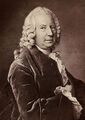
1700: Mathematician and physicist Daniel Bernoulli born. Bernoulli will be particularly remembered for his applications of mathematics to mechanics, especially fluid mechanics, and for his pioneering work in probability and statistics.
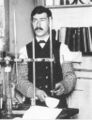
1866: Chemist Moses Gomberg born. Gomberg will identify the triphenylmethyl radical, the first persistent radical to be discovered, and will thus be known as the founder of radical chemistry.
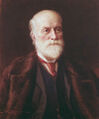
1879: Engineer and inventor Sandford Fleming first proposes adoption of Universal Standard Time at a meeting of the Royal Canadian Institute.
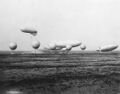
1933: Carnivorous dirigibles found not responsible for recent wave of cattle mutilations. The so-called "carnivorous" digible (Dirigible horribilis) is in fact a grazing ruminant autonomous airship, neither carnivorous nor horrible.
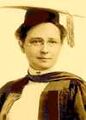
1936: Mathematician and academic Emilie Martin dies. Martin researched primitive substitution groups of degree 15 and primitive substitution groups of degree 18.
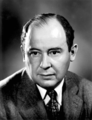
1957: Mathematician, physicist, and computer scientist John von Neumann dies. Von Neumann was a key figure in the development of the digital computer, and developed mathematical models of both nuclear and thermonuclear weapons.